
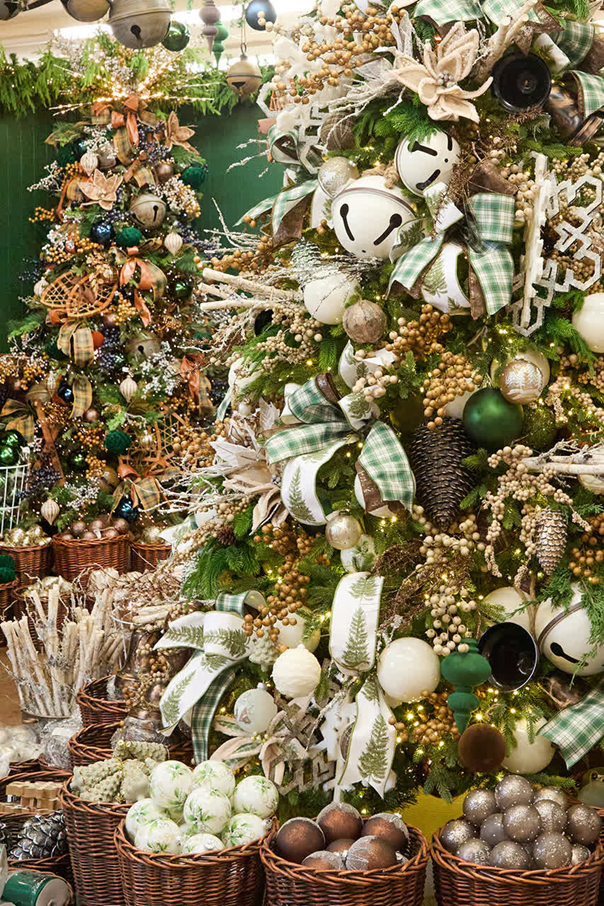
Artificial Christmas trees offer convenience, cost-savings, flexibility, and thanks to the wide range of features they offer, a great deal of versatility to homeowners and other decorators.
But with so many sizes, shapes and other options to choose from, how do you choose the right artificial Christmas tree for your home? This short guide will help!
Tree Height
Tree height is one of the most important characteristics of an artificial tree to get right. First, measure the height of the ceiling in the room in which you want to place and decorate the tree.
Once you know the height of the ceiling, keep in mind the general rule that you should have a foot to two feet of clearance (at least) between the top of the tree and the ceiling.
From there, you can choose a height. Common artificial tree heights include:
- 4 foot Christmas trees
- 7 foot Christmas trees
- 7.5 foot Christmas trees
- 9 foot Christmas trees
- 10 foot Christmas trees
- 12 foot Christmas trees.
While these are the main standard sizes, there are other nontypical sizes, for instance miniature and tabletop Christmas trees that are useful for niche applications.
Tree Size (Width and Profile)
Just like there are many different heights in artificial Christmas trees, there are many different widths or “profiles.”
Standard Christmas trees (or “full”) trees are designed to look like the real thing; there are also “thin” or “slim” Christmas trees that are narrower, which makes them better for placement in tighter quarters. Pencil trees are even slimmer and are ideal for alcoves, corners, nooks and more.
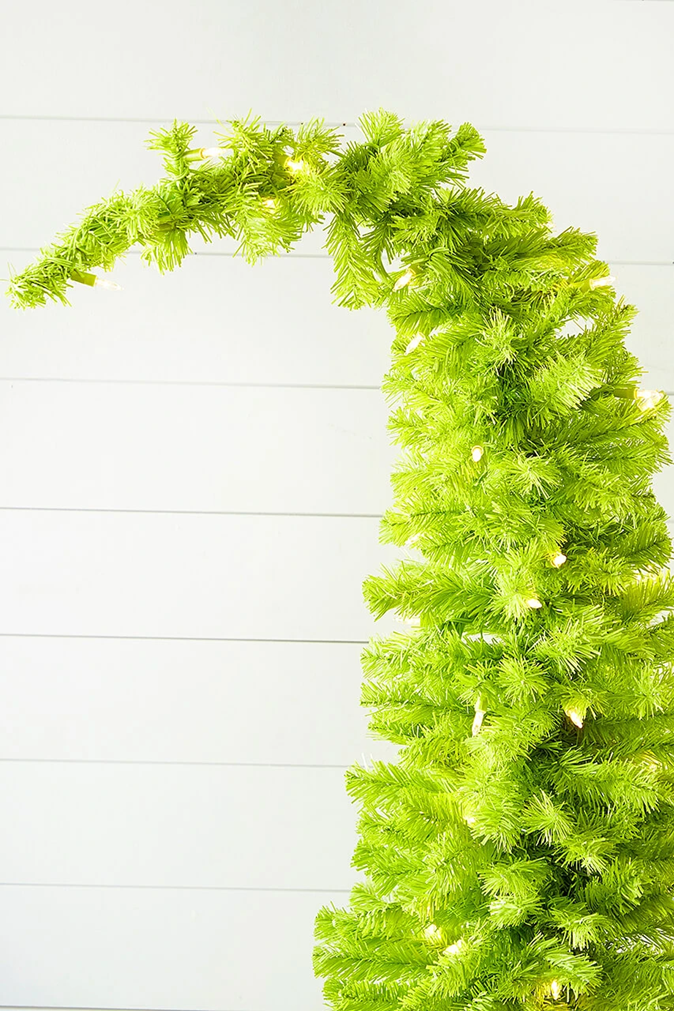
Some artificial trees are also “sparse” and have wide open gaps between the branches and tips to showcase ornaments, creating a minimalist feel. At Decorator’s Warehouse, we also carry “whimsical” artificial trees which are curved at the top for a unique touch.
Branch and Tip Material
There are two main materials from which artificial Christmas trees are made, which are PE, or polyethylene, and PVC, or polyvinyl chloride.
Originally, flat strips of PVC were wound around wire branch tips; the resulting needles are usually flat, and this produces a relatively “traditional” artificial look, because it’s the way most artificial trees used to be made.
Many modern artificial Christmas trees are now made with injection-molded PE, which creates 3D needles that don’t allow the branch tips or wire underneath to show through. These are impeccably realistic and make up some of the highest-quality artificial trees (and natural Christmas greenery) available.
Number of Tips
Most artificial trees have a “tip count” in the specifications, which details the number of branch tips on the entire tree. As a general rule, the higher the tip count, the fuller the tree will be, although tip count is not necessarily correlated to realism on its own.
Keep in mind that tip count doesn’t just let you know how “full” the tree will look, but will also impact how many ornaments you can hang on the tree. More tips means more opportunities for decoration!
Tree Color
Naturally, green is a classic color for artificial Christmas trees, but there are other options out there as well. A popular alternative to green are white Christmas trees, which use an originally green material but are treated with artificial snow in a processing referred to as 'flocking'. Flocked Christmas trees are a great choice for Winter Wonderland themes.
Tree “Species”
High-quality artificial Christmas trees are not just made to look real, they are made to look like real species, such as pine, fir, spruce, and in some cases, even cedar trees.
Other Christmas greenery, like garlands and wreaths, are in some instances also made to impersonate the likenesses of these species, streamlining decorating and helping to create a cohesive look.
Unlit vs. Prelit Christmas Trees
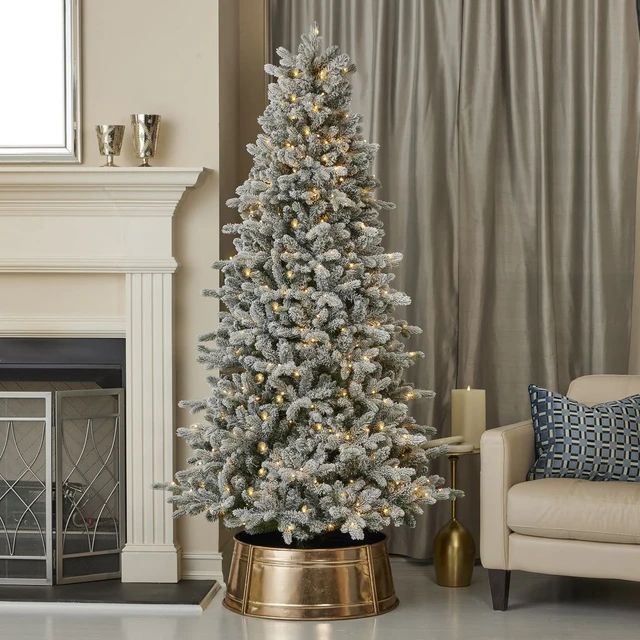
You’ll also want to consider the relative differences between unlit and prelit Christmas trees.
Unlit Christmas trees have a lower upfront cost and since there are no integral lights, you can choose which light strands to hang on them, offering theoretically greater versatility.
Prelit Christmas trees, by contrast, offer convenience and time savings since you will no longer have to deal with light strands, though they do have a higher upfront cost. However, modern prelit Christmas trees have LED lights that last and offer a good deal or versatility as well since many can produce different effects (such as fading, twinkling, steady-on, and more) as well as different colors.
Why Artificial Christmas Trees?
If you’re used to real trees and are considering making the switch to artificial Christmas trees, here are some of the reasons you might want to do so:
- Artificial Christmas trees last for many seasons, real trees only last one.
- Many modern artificial trees are so realistic you almost can’t tell they’re not real, even from a few feet away.
- Many artificial trees break down into small pieces or sections for easy storage.
- Many are easy to put together and break down for storage.
- They’re low maintenance and won’t need to be watered and won’t drop needles.
- They’re easy on seasonal sensitivities.
- Some real trees are made from recycled materials.
As you can see, there’s no shortage of reasons to love artificial Christmas trees. Try one this season and see how you and your family like it.
Your Best Christmas EVER Starts Right HERE!
Whether you’re replacing an aging artificial Christmas tree or will be switching from real to artificial for the first time this season, you’re in just the right place. Decorator’s Warehouse carries an amazing variety of realistic artificial Christmas trees and greenery, along with ornaments, picks, sprays, ribbon, and other trimmings to help you create the most stunning display so you can have your BEST Christmas ever.
Explore our collection here, create your display, and once you’ve brought your vision to life, share it with us by tagging us with #dwchristmas for a chance to be featured!